

“Are You a Palantir Girl?” by Penelope Dieppa

In February 2026 an account under @PalantirGirls was launched on X, showcasing images of female celebrities in mock propaganda posters in favor of Palantir, an American tech company focused on military software/hardware along with data aggregation for private companies and Western governments. Female celebrities have been AI edited to wear MAGA hats, Israeli flags, or to hold small grenades and missiles; all behind slogans taken directly from Donald Trump’s Truth Social posts, Palantir advertisements, or the creator’s own writing.
Olivia Rodrigo advocates for ICE and mass deportations, Zendaya tells viewers to “Fight for your own extinction,” Sabrina Carpenter says America needs more blondes and, “The postwar neutering of Germany and Japan must be undone,” a real quote from Palantir’s official X account. These images, despite spouting far right drivel (though the politics behind them are more complex), are an embodiment of the normalization of far right and genocidal language in contemporary American and Israeli politics.
Online/Outside
Generalizing: prior to the election of Donald Trump in 2016, far right and flagrantly racist language was severely looked down upon. In public, on major social media sites, behind podiums, and from corporate headquarters. This is, again, generalizing, and such racist language that did seep into the public sphere, either spoken by a celebrity or a politician, would usually birth weeks of discourse and discussion, notes app apologies or corporate restructuring, rifts between political institutions demanding the removal of whoever made the social faux pas. The language we see today, the language used by Donald Trump and Stephen Miller, by Ben Gvir and Palantir, was previously sequestered to alternative social sites—think 4chan, incel forums, banned subreddits—and today the visual language and vocabulary of these once hyper-niche communities are now on the bleeding edge of the global zeitgeist.
Though it’s not only the internet percolating into our “real” world, but the real world responding and then affecting the discourse online. During Trump’s first term the online communities he scarcely acknowledged were predominately affected by his words, receiving reality through him. Today, during his second term, Trump and his cabinet work in tandem with online far right communities and speakers, the people Trump surrounds himself with being informed of reality through the images and words posted on X. And since the President of the United States and his party leaders are actively engaging with these communities: their language has infected our daily speech, their language of vitriol and fear. So that now we live in an era where such beliefs—that America needs to indiscriminately deport millions of human beings, that a Palestinian toddler will turn into a terrorist, that the white race is under attack and the Great Replacement must be stopped—are commonplace and we are expected to treat them with the same seriousness and understanding as non-genocidal, non-racist political movements.
It’s the normalization of this language alongside images of thin female celebrities, who have mostly all identified themselves as against Donald Trump, that brings an interesting juxtaposition between the predominately liberal popular culture continuously thrust upon us—all for the purpose of consumerism (which of course must never end)—and the far right militarism of our institutions.

IRL/IDF
Though are these images in themselves that different from what we already see in earnest advertising and propaganda? There are hundreds of accounts on X, Instagram, TikTok, and others dedicated to how sexy real members of the Israeli Defense Force are. Even personal accounts for members of both the US military and IDF get thousands of likes and comments, mostly run by buxom women in flattering fatigues. Although the IDF’s on paper rules for the social media use of its active members appears quite strict—there's a plethora of content from, especially young women, within its ranks. According to Rolling Stone, “it’s fair to say that IDF soldier thirst traps are part and parcel with the official IDF’s general strategy to use social media to win hearts and minds across the globe.” This strategy includes TikTok accounts like @mayadadon30, an Israeli singer (and member of the IDF); @navy.band, three women within the Israeli navy who sing show tunes to the camera, now reposted on the official IDF TikTok for Valentine’s Day; or even @meitavidf, the official account of the recruitment arm of the IDF, whose videos consist mainly of silly skits about the process of recruitment or large community events within Israel.

Most of these accounts, both personal and institutional, purposefully obfuscate the militarism of a military, separating the daily running of the IDF from the violence inflicted upon Palestinians, and portraying the IDF as a sort of summer camp allowing young Israelis and diasporic Jews to find friendship and community. A majority of personal accounts, and there are thousands, exclusively post videos of themselves and friends dancing in the barracks or outside, no guns or war in sight, with no acknowledgment of the debate surrounding the conflict. As if their membership in the IDF has zero relevance or connection to the genocide of Palestinians or any sort of wider geopolitical debates.
Within videos where the violence cannot be hidden, there are two approaches. Either the purpose is to defend against accusations of genocide (always in English for an international audience); or—like this video from @lihiperetz6 where she and a friend wear assault rifles slung across their cartoon pajama sets—soldiers showcase the weaponry and violence as casually as a satchel purse. It’s all these individual women’s accounts that get ripped and reposted onto pages like @IDFBabes or @standwithisrael2400.

In Digital Militarism: Israel’s Occupation in the Social Media Age, Kuntsman and Stein discuss the relationship between social media and militarism in Israeli society, writing in regards to selfies taken by IDF members before the planned ground invasion of Gaza in 2012: “On the one hand, these photographs reinstalled a familiar Israeli iconography of militarism, casting soldiers as beautiful and often erotic subjects … Yet the visual language of the selfie interrupted the wartime storyline. For despite army uniforms and weapons, these mobile self-portraits powerfully articulated the banality of the not war.” These selfies and TikToks go against the story of the IDF soldier bravely running into battle against an anti-Zionist Arab threat, and show rather that the war at the center of Israeli society is something casually captured for Instagram. Kuntsman and Stein relate these images to a “public-secret,” defined as “a secret that is known to the public but which the public chooses to keep from itself”; in Israeli society the “public-secret” is to live as if they are in an always war. As if the violence perpetrated within the West Bank and the Gaza Strip has nothing to do with the quotidian, that the apartheid in Israeli society is not real though their politicians advocate for its continuation. These images and videos force Israelis to accept that both IDF service members are brave and risking their lives for the Israeli way of life whilst living in Western excess with time to practice lip syncing provocatively into their smartphones.
American celebrities in MAGA hats, blatantly advocating for the ethnic cleansing of the United States, force us to face our own “public-secret.” That these women, Hailey Bieber and Olivia Rodrigo, Zendaya and Madelyn Cline, act as the sanitized cultural output of the American military industrial complex. Even if these women do occasionally post against the Trump administration, or in Hannah Einbinder’s case speak up about the Gaza genocide, they still participate in an entertainment industry that has no interest in politics or activism, and is solely driven by profit margins. In as much as we want to claim the most pious of these women are innocent, the “public-secret” of the United States is that we all, by living our lives everyday, by shopping at the grocery store or driving to work, are indirectly responsible for the deaths of tens of thousands of civilians in Gaza. For the inhumane treatment of immigrants at the hands of ICE agents. For the economic insecurity and instability caused by our armed forces. The “public-secret” is that we act as if this is not true, that by thinking against and even speaking against, we are immune from criticism and the tight grasp of the long spindly tendrils of the military industrial complex. All of us are to blame, in some shape or form, no one is innocent.
Silicon/Provocative
These images by @PalantirGirls resemble the advertisements of contemporary cosmetics and beauty brands, which in turn are inspired by the fashion editorials of the 1990s, which then appropriated fascist and post-Soviet aesthetics. Our current counter cultural movement, what academics refer to as the “New Right” and is closely related to the leaders of emerging technology companies in Silicon Valley, is in fact not new in a long history of cultural deviants dipping their toes in fascist aesthetics and ideas. What is new however are how powerful the people leading this cultural moment are. “I no longer believe that freedom and democracy are compatible,” writes Peter Thiel, founder and chairman of Palantir, in a 2009 essay titled “The Education of a Libertarian.” Thiel’s politics, along with many of the New Right, are complex due to the successes of moral liberation via feminism and the LGBTQ+ movement (Thiel being an out homosexual), whilst also having an infatuation with Catholic aesthetics. It’s a precarious alliance, built on hatred, between young and emerging conservatives across the Western world, whose moral judgments of pornography, feminism, big tech, LGBTQ+ issues, and Israel can diverge greatly.
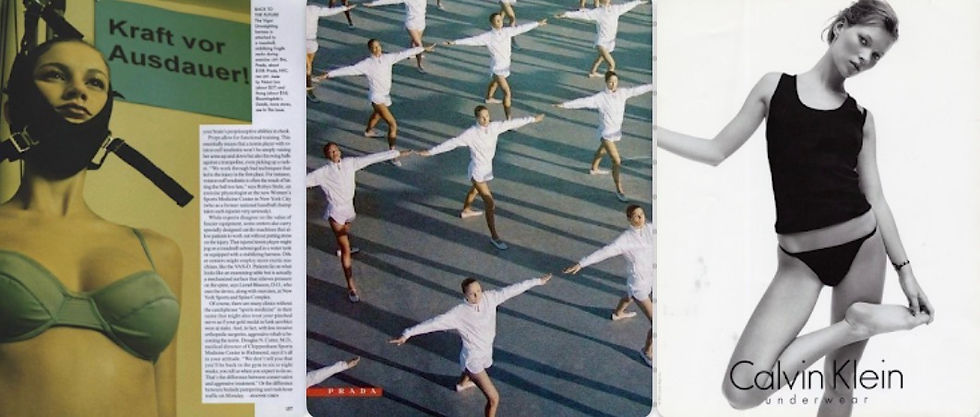
Silicon Valley is desperately trying to enter the same cultural domain as fashion or cosmetics, whose industries require that some people are better than others and have held an air of mysticism because of the fact. I call this new type of aesthetics Silicon-Provocatism: heavily inspired by Apple advertisements and UX, where utilitarianism and “good” design are united with insidious motives of mass unemployment, anti-democracy, racism, and the genocide of people via satellite whilst presenting technology as a beautiful thing unto itself. No longer do we worship the benefits these technologies bring, but the technology is what we love. Technologie macht frei.
This new aesthetic, which includes Palantir’s real advertisements, along with companies like Kalshi or even X itself, is only just emerging on the fringes of Silicon Valley—but—via the internet has seeped into the official correspondence of the Trump administration.
@PalantirGirls (a Silicon-Provocateur) is creating images I venture we will see more of in the coming decades, in more earnest contexts.
Palantir/Girls
“I think I wanted to show the absurdity of what Palantir is doing, how a multibillion dollar techno-fascist super-corporation can be so cartoonishly evil, and still be backed by the executive branch,” @PalantirGirls tells me in an X message, going on to describe himself as a “dues paying DSA member.”
“There will be a revolution,” he adds.
It wasn’t entirely clear to me that these images were coming from a place of leftist critique; in fact, I originally believed whoever was behind the account to be some sort of ultra right nationalist, who believed Donald Trump to be too liberal. I’m glad to be mistaken, however other questions spring forth: Who’s the audience? And who are these people making similar accounts like @PalantirMag or @ICE_Babes_? The comment sections and followers are clearly not made up of card carrying communists enjoying subversive commentary on contemporary America. So whom?
“I do find the whole thing hot,” he admits, “I also happen to be getting quite a bit of money from right wing losers via Throne.” As in, his top contributor on Throne has sent him over $500, and there are others. A majority of the accounts in @PalantirGirls’s comments sections are either complaining about him placing their favorite celebrities in unsavory political drag or accounts like @EdgeForBrats who replied simply, “😵💫” or @benditochico requesting, “more clairo please.” Accounts in the comments hold a wide range of political beliefs—with people from across aisles and continents—while others like and post nothing besides pornography, and their politics remain a mystery. Defunct @ivyleaguegoon, who was followed by @PalantirGirls, rated Gal Gadot a 9/10 before replying to their own post, “And while we’re at it, FUCK ISRAEL!” Men of all political orientations appear to be united via their non-discerning libidos.
It’s difficult to explain any fetish, especially one defined by contradiction. The hatred of Palantir and the neoliberal establishment—or hatred for the minorities that the women are condemning—merges with the sexual imagery. This confusion is powerful, it’s what the IDF uses and passively allows on the accounts of its members. It’s what advertising does with more subtlety: negative emotions aligned with the positive experience of purchasing something. Consumerism as catharsis. Though possibly @PalantirGirls said it best, “If Kendall Jenner stared down the barrel of a camera and told me to be a better socialist, I would be motivated to be a better socialist.”

Works Cited
________

Penelope Dieppa is a beautiful woman asking you to be a better Marxist. She was born in the Leningrad Oblast but now resides in Brooklyn.
Penelope Dieppa is on X @KnausgaardFacts and Instagram @penelopedieppa
I can only imagine how brave and prescient this piece would have been in 2018. I assume that you must be an older millenial? I'll not attempt lecture you from a feminist perspective, as I have no doubt you're more familiar with the critique than I, but using the female form to normalise and promote concepts has a centuries long history in both the US and Europe. I only mention that because history didn't start in 1938 Berlin. You imply that any image of a woman is fascist in nature, which would indicate a far more misogynist perspective of women than most men exhibit oline. There certainly was a possible perspective that would have madet this piece more interesting, considering…
this is a moment